

What Does GMC Stand For?

Ever glanced at a GMC badge on the tailgate ahead of you and wondered what those three letters actually stand for? You're not alone — it's one of the questions the team at Gateway GMC hears most often from shoppers here in Dallas. So what does GMC stand for, and why does a name with over a century of history behind it still matter when you're shopping for a new truck or SUV today? Here's the rundown.
KEY TAKEAWAYS
- GMC stands for General Motors Company, the truck- and SUV-focused brand under the General Motors umbrella.
- The brand traces back to 1901, when Max Grabowsky built his first motor truck in Detroit.
- GMC officially joined General Motors in 1909 and took on the GMC name and logo a few years later, in 1912.
- GMC vehicles are assembled at several plants across the U.S. and Canada, including a facility right here in Texas.
- GMC continues expanding its lineup with new engines and electric models, keeping the brand's future just as strong as its past.
What Does GMC Stand For?
GMC stands for General Motors Company. It's the truck- and SUV-focused brand under the General Motors family, sitting alongside Chevrolet, Buick, and Cadillac. That wasn't always the name on the badge, though — it took a couple of changes to get there.
GMC's roots go back to 1901, when a Detroit machinist named Max Grabowsky built his first motorized truck. He and his brother soon founded the Rapid Motor Vehicle Company, one of the earliest American companies built purely around trucks rather than passenger cars.
Around the same time, the Reliance Motor Car Company was producing its own early commercial trucks in Michigan. General Motors, still a young company itself, acquired both Rapid and Reliance in 1909 and folded them into a single truck-making division.
By 1912, that division bore the GMC name for the first time, and the brand has built on that foundation of hauling and hard work ever since. Anyone asking “What does GMC stand for?” is really asking about a company that's been building trucks from day one.
How GMC Got Its Name
- 1901: Max Grabowsky builds his first motor truck in Detroit
- 1909: General Motors acquires Rapid Motor Vehicle Company and Reliance Motor Car Company
- 1912: The GMC name and logo appear on trucks for the first time
- Today: GMC operates as GM's premium truck and SUV brand
What's the History Behind the GMC Brand?
GMC spent its early decades proving itself on job sites and, later, battlefields, before becoming the SUV and pickup brand drivers know today. Trucks bearing the GMC name have hauled cargo, supplies, and troops through some of the most demanding conditions in American history.
During World War II, GMC trucks played a major role in the war effort, with the company producing hundreds of thousands of vehicles for the U.S. military — everything from cargo carriers to amphibious transport used overseas.
That reputation for durability carried over into peacetime, and GMC spent the following decades expanding its lineup of pickups, vans, and eventually SUVs for everyday drivers.
By the time SUVs took off in popularity, GMC had already spent generations proving its trucks could handle serious work, making that shift feel natural rather than forced. That work-first identity still shapes the brand today, from the Sierra pickup to the Yukon and Terrain.
GMC Historical Timeline
| Era | Milestone | Why It Matters |
|---|---|---|
| 1901 | Max Grabowsky builds his first motor truck | Marks the founding moment of what becomes GMC |
| 1909 | General Motors acquires Rapid and Reliance | GMC's predecessor companies join the GM family |
| 1912 | The GMC name appears for the first time | Brand identity is established |
| 1941–1945 | GMC supplies trucks for WWII | Cements GMC's reputation for durability |
| Today | GMC builds trucks, SUVs, and EVs | Brand carries its history into a modern lineup |
Where Are GMC Vehicles Built Today?
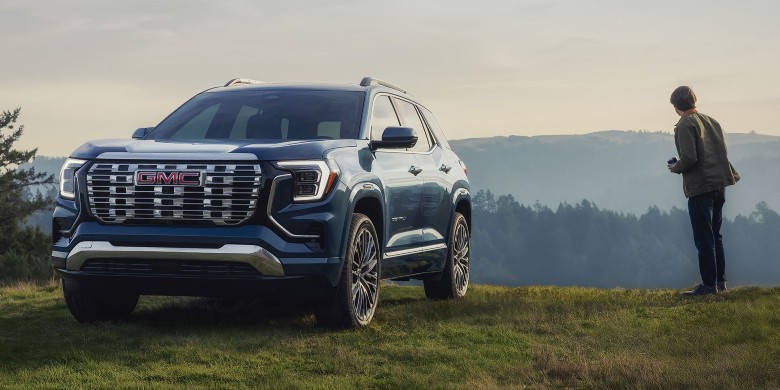
GMC vehicles come from several assembly plants spread across the U.S. and Canada, with each plant dedicated to specific models. That spread keeps production close to suppliers and helps GMC keep pace with demand for its most popular trucks and SUVs.
GMC's headquarters sits in Detroit, Michigan, but the vehicles themselves are built well beyond that one city. The Sierra pickup comes out of an assembly plant in Indiana, while the Canyon is built in Louisiana.
On the SUV side, the Yukon and Yukon XL are assembled in Arlington, Texas — not far from Dallas at all — and the Acadia comes from a plant in Michigan. The Terrain, meanwhile, is built north of the border in Ontario, Canada.
That kind of geographic spread means shoppers looking at GMC SUVs or trucks are getting vehicles built by teams who specialize in that exact model, not a one-size-fits-all assembly line.
A Legacy That’s Still Being Built
There's a lot packed into three letters. What does GMC stand for boils down to General Motors Company, but the badge represents more than a name — it represents more than a century of trucks built for work and SUVs built for families, plus a lineup that keeps evolving with new engines, technology, and electric options on the way. That kind of staying power is part of why so many Dallas drivers keep coming back to the brand. Gateway GMC is proud to carry that history forward with every truck and SUV on the lot.
Curious how that history translates into the truck or SUV you'd actually be driving home? Stop by Gateway GMC in Dallas to see the current lineup in person, or reach out to our team with any questions about a specific model. Test-driving one is still the best way to feel what over a century of GMC engineering adds up to.
FAQ
Is GMC the same as Chevrolet?
No. GMC and Chevrolet are separate brands that both fall under the General Motors umbrella, alongside Buick and Cadillac. GM acquired Chevrolet in 1918, about a decade after GMC became part of the company.
Who owns GMC?
GMC is owned by General Motors, a publicly traded company. GM also owns Chevrolet, Buick, and Cadillac.
What does GMC stand for on a vehicle badge?
The letters stand for General Motors Company, though the brand operated under different names before General Motors folded it into a single truck-making division in 1909.
Are GMC trucks and Chevy trucks the same?
They share some underlying engineering since both come from General Motors, but GMC trucks are positioned as the brand's more premium, work-ready option, with their own styling, trim levels, and features.
Does GMC make electric vehicles?
Yes. GMC has expanded into electric models in recent years, including electric versions of some of its most popular trucks and SUVs, with more expected as the lineup grows.
Ready to experience a new GMC truck or SUV at Gateway GMC?
Contact Us Today
Complete the form below and a representative from Gateway GMC will be in touch to answer your questions or help you find the right vehicle.
Make an Inquiry
* Indicates a required field
Shop New
Acadia SUVStarting MSRP $43,800

HUMMER EV SUV SUVStarting MSRP $97,200

Terrain SUVStarting MSRP $30,200

Yukon SUVStarting MSRP $69,600

Yukon XL SUVStarting MSRP $72,600

Canyon TruckStarting MSRP $38,900

HUMMER EV Pickup TruckStarting MSRP $97,200

Savana Cutaway TruckStarting MSRP $37,650

Savana Cutaway 4500 TruckStarting MSRP $41,500

Sierra 1500 TruckStarting MSRP $38,300

Sierra 2500 HD TruckStarting MSRP $47,000

Sierra 3500 HD TruckStarting MSRP $48,200

Sierra 3500 HD Chassis Cab TruckStarting MSRP $47,900

Sierra EV TruckStarting MSRP $62,400

Savana 2500 VanStarting MSRP $42,200

Savana 3500 VanStarting MSRP $46,150
